Interview with Peter Diamandis

Your personal motto is “the best way to predict the future is to create it yourself,” And not so surprisingly, you are a serial entrepreneur. You have founded several companies including International Space University, XPRIZE, Singularity University, Human Longevity Inc., and Planetary Resources, just to name a few. What art the ties that bind your areas of interest and the companies that you have founded?

P: I think the common theme that binds them together is my passion, which has evolved over time. My passion early on was space, and space has always been one of my core underlying passions.

I think it was during medical school a decade or two later than I became enamored with the idea of longevity as a theme in terms of trying to extend the healthy human lifespan. I was in medical school, and I had been reading about species of life on Earth, such as whales, turtles and certain species of shark that had lifespans measured in hundreds of years. My feeling was that if they can live that long, why couldn’t we? This interest in longevity also stemmed from my interest in space, in the sense that there is a lot to explore, and if we can live longer, we will get to see more of it.

Space led to the XPRIZE, and the XPRIZE led to this real empowerment of the notion that we can do extraordinary things. Technology, in the hands of individuals today, is growing at such an extraordinary rate that we do not need to depend upon a few wealthy robber barons or government officials to solve our problems. Through technology, we are empowered more than ever before to solve our own problems. As a result, the XPRIZE grew from a focus on space to a focus on solving Grand Challenges.

All my companies weave together, they are all passion driven. They all tie back to that theme of “the best way to predict the future is to create it yourself.” It is about creating a future of abundance, a future of an exploring species and a future of healthy longevity. These are areas that I am excited about. 

관련 이미지

How do you divide your time, and how do you find your partners across these businesses? You only have so many hours in a day, and you have chosen your partners wisely. I am curious how often the idea comes up and you seek a partner or if it is in the partnership that the idea itself arises.

P: There are a couple of points to make there. I have learned over the years to know what I love doing and what I am reasonably good at, and what I do not love doing and what I am good at. I love the early creative phase, coming up with the idea, brainstorming the idea, laying out the vision, finding the formative team, raising the capital, and then stepping back and hiring a CEO to run it – or if I take the CEO position myself, as I have a few times, replacing myself. The hiring, the firing, and the detailed minutiae is not my forte. In the case with almost everything, I am proud to have a great CEO as a partner there. I typically will take a role as Executive Chairman because while I still am involved in some elements of the day-to-day, it is more the strategic partnerships, the capital and the long term, big picture, not the day-to-day operations of the company.

Singularity University has a track dedicated to foresight and futures studies. As you advise organizations about methods to use to anticipate the disruptive forces in their industries, what are some of the things that you advise they think about?

P: The conversation is a lot around having them understand what is going on in each of the exponential technologies – computation, sensors and networks, artificial intelligence, robotics, digital manufacturing, augmented reality, virtual reality, synthetic genomics, and so on. Understanding what is in the lab today, and what is coming to market in a two-to-five year horizon is important. Next, I ask executives, “What are your three biggest problems that, if they were solved, would transform your business.” I also ask them to think about, “What are your three biggest strengths that are the basis of why you are doing well; what are the strength that give your value.” I will then say, ”As we talked about each of these technology areas, how might AI, for example, solve your challenges or disrupt your strengths.” We will go through each of these technology areas and people will gain insights. That is the way companies need to be thinking about it.      

From Forbes

Image: nbforum

The Entrepreneur Behind Beyond Meat Pursues Innovation Over Profit.

If Ethan Brown gets his way, within the next few years, his now-tween kids will drive themselves to McDonald’s, Burger King or Wendy’s to order a plant-based burger made by his company, Beyond Meat.

Brown founded Beyond Meat in 2009 to present consumers with a good alternative to meat to solve one of the biggest problems facing the world today: climate change. That’s based on the fact that one of the biggest choices an individual can make toward helping the planet isn’t buying an electrical vehicle, but cutting down their consumption of animals. It’s a topic Brown had been intimately familiar with, as he spent part of his youth helping his dad on the family’s Maryland milk farm.

“With that exposure and interest in clean tech and climate, I thought that I could solve things that I cared about by focusing on protein in the plate.”  

After years of experimenting with the process on imported plant protein from Taiwan, the company released its first product, Chicken-Free Strips, which landed on the shelves of northern California Whole Foods stores in 2012. The product proved to be a hit, and started selling in other Whole Foods regions. Now Beyond Meat’s product offerings include a plant-based beef crumble, burger and a sausage, which debuted in December.

The company has caught the eyes of big-name investors, including Bill Gates – who wrote he “couldn’t tell the difference” between Beyond Meat and real chicken – Twitter co-founders Evan Williams and Biz Stone, venture capital firm Kleiner Perkins and Tyson Foods, which purchased a five percent stake in the company in 2016.

Beyond Meat’s products are now available at more than 19,000 retail stores and restaurants nationwide, with the burger specifically available in the meat case at more than 5,000 grocery stores and on the menu at more than 4,000 hotels and restaurants.

“We have to use technology to get us on a path to a solution. The second thing about coming from the energy sector is that I’m not afraid to spend a lot of money on research and development. Why are we spending so much money on lithium ion batteries for cars and so little money on creating plant-based meat? That’s a mistake, and we’re trying to remedy that.”

“Don’t follow the herd. The problem with venture investing is there’s so much of that going on. Really marinate in the problem, try to figure out exactly what you’re trying to solve and how you uniquely can help solve that. Stick to a problem that you feel personal about because then you’ll work hardest to solve it.”

From Entrepreneur.com

Move Slow and Make Things: Airtable’s Howie Liu Built A $1B Software Giant Emphasizing Substance over Speed

In the frenetic world of tech, where the ruling ethos is to move fast and break things, Howie Liu moves at a glacial pace. With Andrew Ofstad and Emmett Nicholas, he launched Airtable in 2013. They wanted to create a spreadsheet with the power of a database. Then they spent three years building a prototype. 

The trio pored over academic papers on collaborative software theory, agonized about the Node.js architecture and obsessed over the speed at which windows popped open. After reading Kenya Hara’s design book White, Liu spent months focusing on the interplay of color and empty space.

Now Airtable is coming to a boil. Liu’s cloud-based software has taken hold in 80,000 organizations, from Netflix to small nonprofits. Revenue is on track to jump 400% to $20 million in 2018, mostly on word of mouth.

Airtable has attached an approachable drag-and-drop experience to a powerful database, much as Windows replaced tedious text-based commands with a graphic interface or AOL offered a welcoming portal to the Web. “It’s an intuitive and fun way to build on data in a way you can’t with clunky products like Microsoft Access and Excel,” says Ray Tonsing of Caffeinated Capital. “It’s a joyful product to use.”

Liu is convinced Airtable can win by being software’s version of Lego, providing blocks to let any business build do-it-yourself custom software cheaply and quickly. “America’s most valuable data is still stored in people’s heads and on Excel sheets,” says Sam Lessin of Slow Ventures, which joined in Airtable’s fundraising in March. “If you can become the place where all the data that operates most business goes, the opportunity to build an ecosystem and be the next great platform becomes obvious.”

Airtable has illustrious acolytes. Netflix uses it as a tool in its postproduction pipeline. Atlantic Records built an Airtable program to manage communication between producers, songwriters and performers. WeWork, an early adopter, has thousands of employees on the software to manage and plan construction projects.

For Calvin Klein, an Airtable database ironed out its fabric-sourcing operation-once a complex juggle of thousands of emails and offline spreadsheets between designers, projects managers and overseas textile mills. Now there’s a central application that manages calendars, images, production costs, manufacturing lead time and shipping schedules. PVH, the parent company of Calvin Klein, has since deployed Airtable to its other brands.

During Hurricane Harvey, the nonprofit Austin Pets Alive created an Airtable app to track missing animals. Cattle farmers in Idaho use it to chart the health history and vaccination records of cows.

At 13 Liu taught himself to code C++ after finding an unread training book in his dad’s office. At 16 he went to Duke and in 2009 got a degree in mechanical engineering and public policy.

Liu landed a software development job in San Jose at Accenture. The salary was higher than his parent’s combined income. But the night before his start date, he got cold feet and never showed. “It was a tough decision. I didn’t have any financial resources to fall back on,” Liu says. “But ultimately I choose to try to do a startup.”

He launched a four-person company called Etacts that aggregated messages from email, Facebook and Twitter. In 2010 Liu got a spot in Y Combinator, the Mountain View, California, nursery for new ventures. Later that year he sold Etacts to Salesforce, netting a million-dollar payday and a gig building a chat product.

At Salesforce, Liu liked the people and the salary but again felt the pull to start something new. He left in 2012, traveled to Japan and Uganda and read books on philosophy and design theory. At that point Andrew Ofsad, a classmate from Duke, was on sabbatical from his sabbatical from his project manager job at Google. Soon the two were lugging oversize computer monitors to each other’s apartments to toy with programs. They wrote one for organizing photos and built a word processor for creative writing.

From Forbes

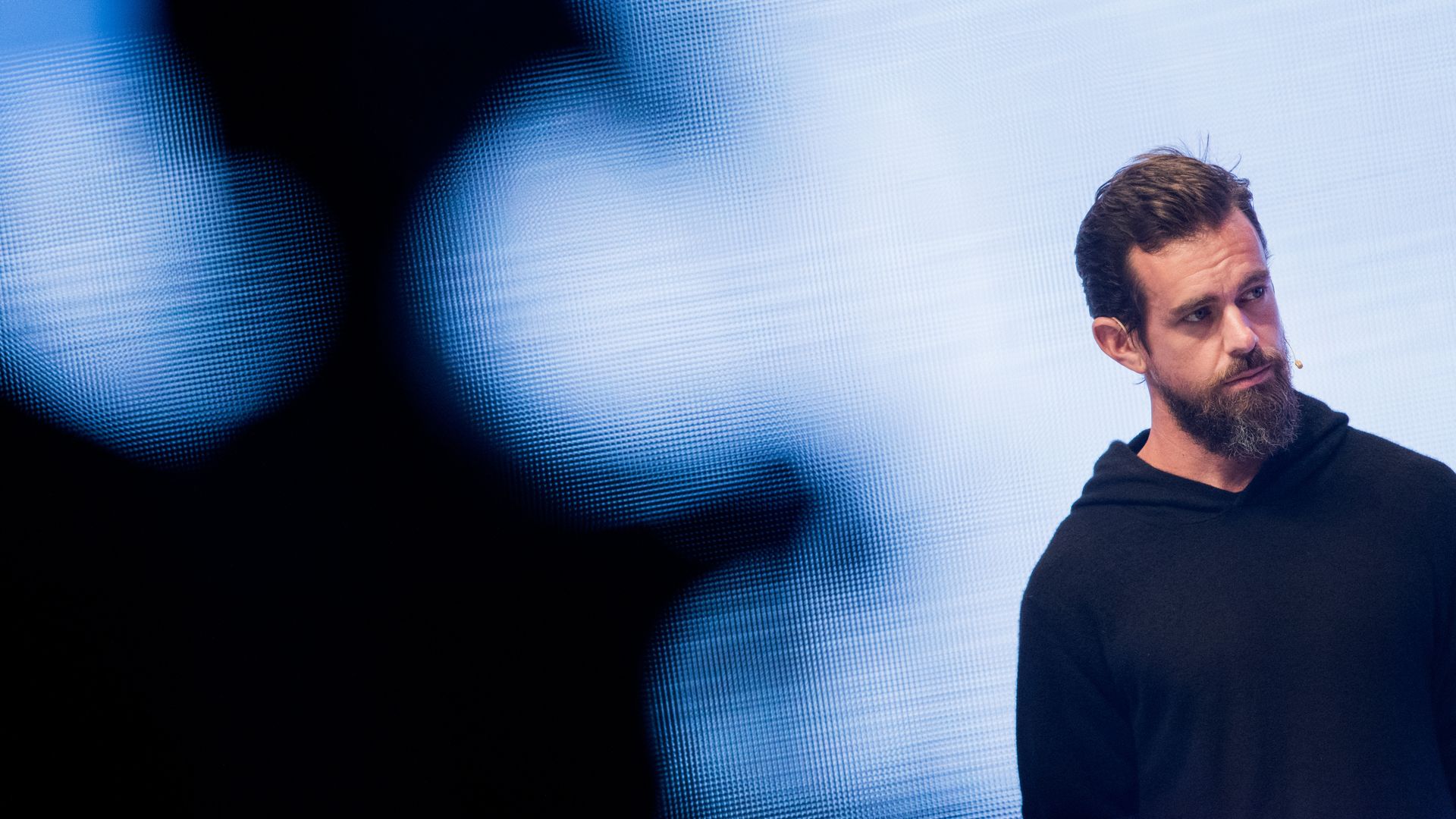
Jack Dorsey Interview from The Players’ Tribune


JACK D


How can Twitter do a better job of creating a more civil environment online?

 Our job is public conversation, so we’ve been asking ourselves a question, “Can we measure the health of a conversation?” We have a service that some people have been able to take advantage of to amplify harassment, abuse, misinformation- so we need to understand how and then continue to develop solutions around it.

 You know when you’re in a conversation that’s toxic. You know when you’re in a conversation that is empowering. So can we measure the health of the public conversation on Twitter? We know it’s possible – it’s just going to be a lot of hard work. The reason why we believe a health framework is important to focus on, rather than harassment alone, is because then you can address problems of harassment, you can address problems of abuse. You can address problems of misinformation, of manipulation through automation or through coordinated human campaigns, all these things that we’ve been seeing over the past years. And we need to understand how, and then as we continue to develop solutions around it, are they actually being effective?

​ So we’re trying to come up with a series of indicators of health for conversation, so that we can measure what the health is. When we know where we are, we can actually figure out if we’re making progress as we create tools for people to increase their health on the service. Because if we can’t measure it, we can’t improve it.

 And we realized that we can’t do this alone. We’ve made an open call for help here – we created an RFP- a request for proposal- to researchers and academics and organizations around the world to help us think about measuring conversational health and then help us think about treating any toxicity. And we are also committed to being open about all of our findings as well. We want to make sure that we are a trusted service, and trust to us means we have to be transparent, that we have to be clear and consistent in our communication and that we need to hold ourselves accountable.

Rolf Vennenbernd에 대한 이미지 검색결과


 Diversity in the workplace is important to young people – and Silicon Valley hasn’t really been a leader in that department. What real steps in the tech world and Twitter specifically can they take to increase diversity?

​ First and foremost, we need to make diversity a priority. We need to recognize that we’re only going to build a product that is valuable to the world if we understand the world’s backgrounds and perspectives. The only way we’ll build a viable service is if we look a lot more like a cross-section of the world and include more folks who haven’t had a voice in the past.

​ But we’ve taken a slightly different take than I think you’ll hear in the industry, which is: Focus on inclusion first, then on diversity. Because if you just focus on diversity, then people come in and they don’t feel like they belong or they don’t feel included. Then they opt out, and they go somewhere else. So we need to build a culture that is inclusive to everyone who is on our team right now – focusing on the people that we have and making life better for them. If we can get that right, then diversity becomes a lot easier.

​  To go back to the idea of focusing first on what we have: We have people who come to work in customer support, for instance, but they really want to be an engineer. We could take on a mindset of, well, you need to go to college to become an engineer, and you need to come to our door having engineering skills. Or we could take a mindset of, What do you want to be? And how can we help you attain those skills? That’s what I would like to focus on more. We have a bunch of people who have ambitions that are different from the jobs they hold in the company. We need to understand what those ambitions are and how do we build a path to help them get there? And we’ve shown that we can take someone who comes in at an quote-unquote entry-level job and has an ambition to be something different, and we’ve actually helped them get there. So, that’s a story I would love to be able to tell for a majority of our folks, but it’s going to take some time, and we need to focus more on it.

Images from Rolf Vennerbernd